

Sudipta Deb
Founder of Technical Potpourri, Co-Founder of Shrey Tech, Enterprise Cloud Architect
In the realm of artificial intelligence, a groundbreaking wave is sweeping through, promising to revolutionize how we create, interact, and experience the world around us. This wave is none other than Generative AI.
Generative AI, a subset of machine learning, has the remarkable ability to generate new content, be it text, images, audio, or even code. It's like having a creative partner that can learn from existing data and then produce something entirely novel, often indistinguishable from human-created work.
In this blog post, I will be covering the important topics to introduce you to the Generative Artificial Intelligence.
The form you have selected does not exist.
Watch The Video Or Read The Article (Or Do Both  )
)
 )
)
What is Generative AI?
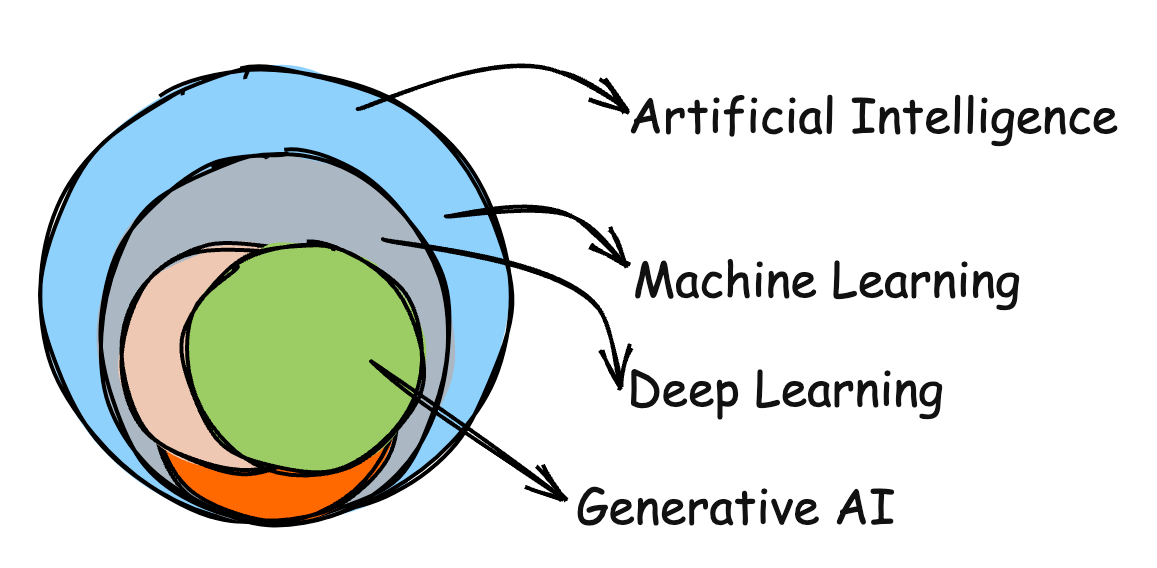
Generative AI is atype of Artificial Intelligence Technology that can produce various types of content, including text, image, video, audio. etc. Let's start with this very simple definition. Very soon I will define Generative AI is more sophisticated way.
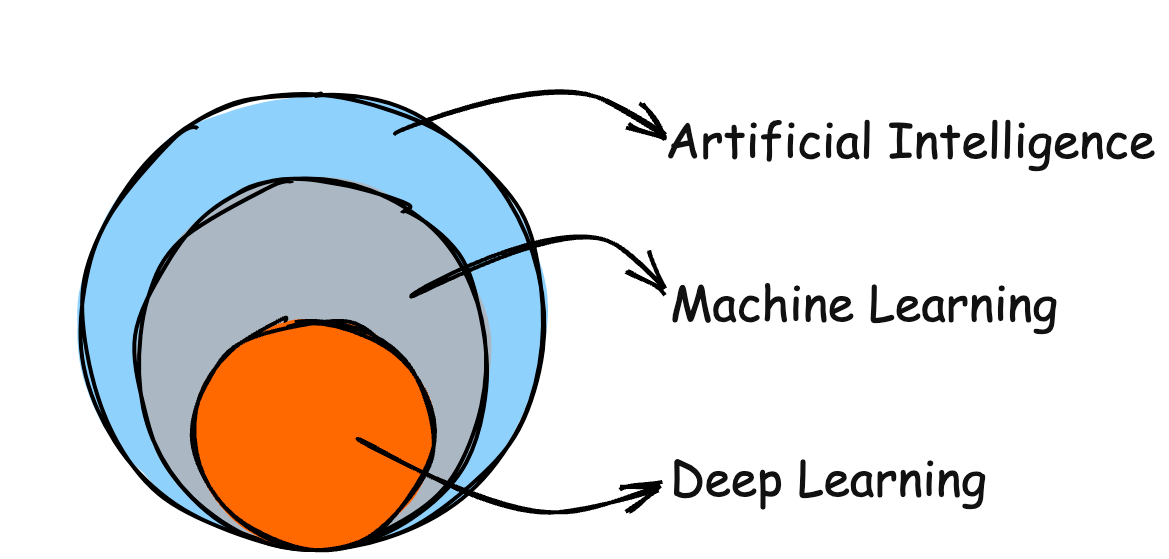
Artificial Intelligence Is Not The Same As Machine Learning
Artificial Intelligence - It is a discipline. It is a branch of computer sciebce that deals with the creation of intelligent agents, which are basically systems that can reason and learn and act autonomounsly.
Machine Learning - Machine Learning is a subset of AI. It is the program which trains a model from it's input data.
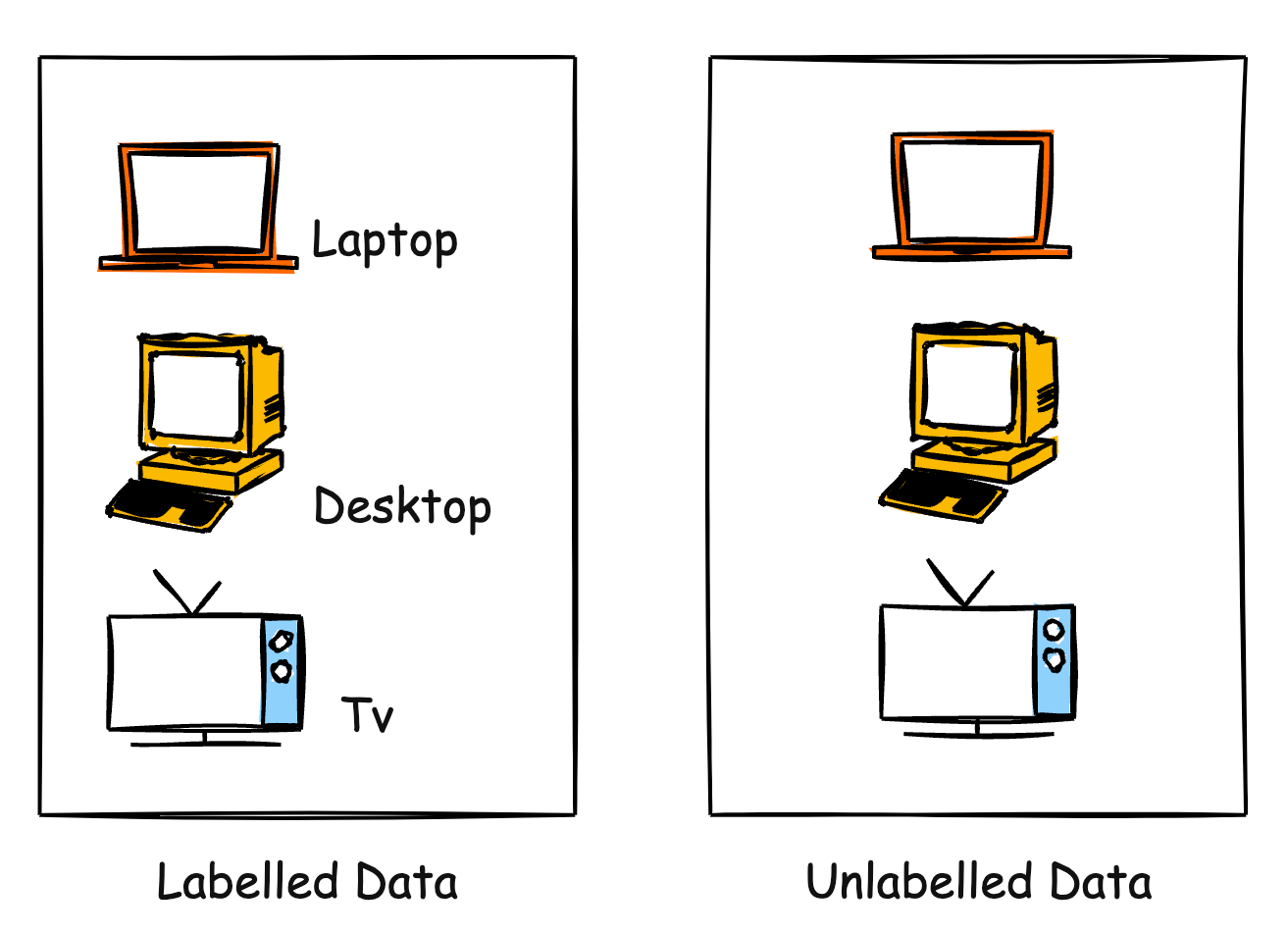
Labelled Data Vs Unlabelled Data
Labelled Data - Any data which has a characteristic, category, or attributes assigned to it can be referred to as labeled data. For example, a photo of a cat, the height of a human, price of a product is some examples of labeled data.
Unlabelled Data - Any data that does not have any labels specifying its characteristics, identity, classification, or properties can be considered unlabeled data. For example photos, videos, or text that do not have any category or classification assigned to it can be referred to as unlabeled data.
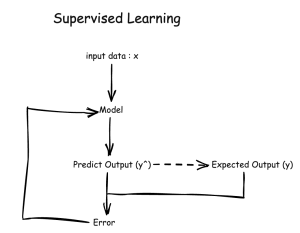
Supervised Vs Unsupervised Learning
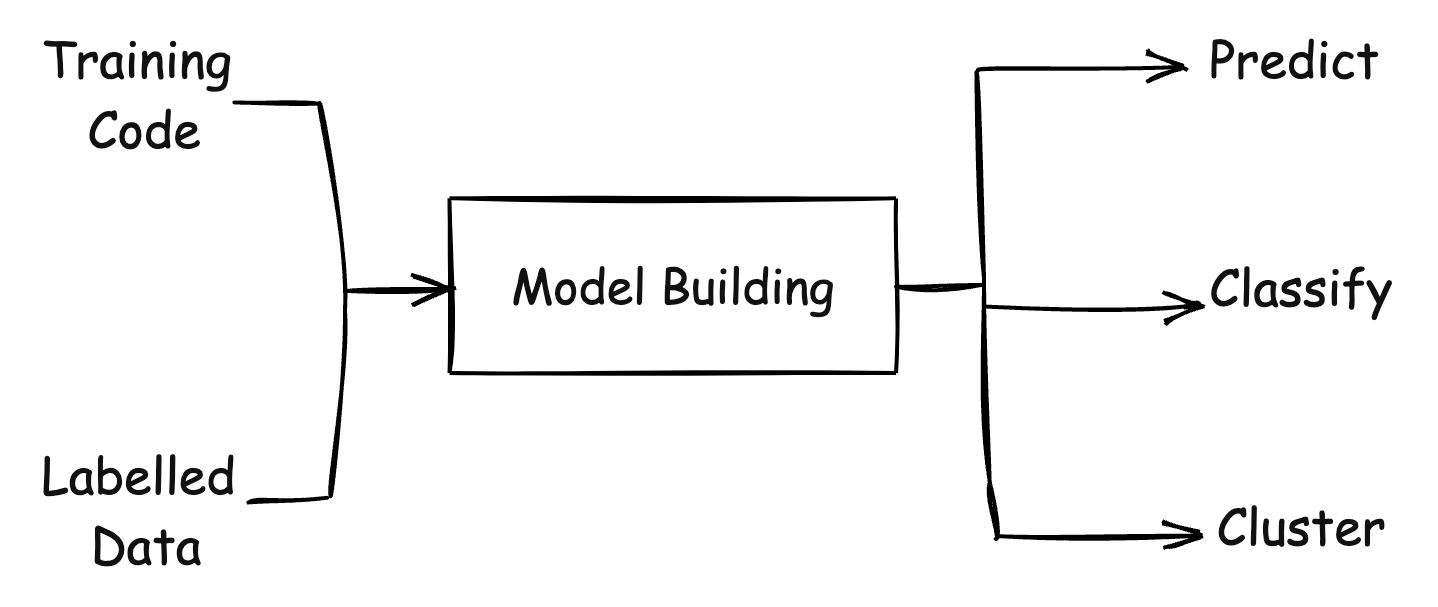
Machine Learning has two models. First one is known as Supervised Machine Learning Model as it deals with Labelled Data. The second one is Unsupervised Machine Learning Model as it deals with Unlabelled Data.
Supervised Learning
In this type of learning, input data (x) is passed to the model and the model predicts the output. Then the predicted output is compared with the expected output and if the difference between them is too much, it ended up in error. In this situtaion, model will try to predict another output thus trying to reduce the difference between predicted and expected output.
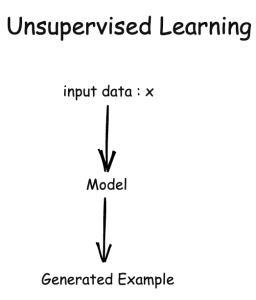
Unsupervised Learning
Unsupervised learning in artificial intelligence is a type of machine learning that learns from data without human supervision. Unlike supervised learning, unsupervised machine learning models are given unlabeled data and allowed to discover patterns and insights without any explicit guidance or instruction. In this type of learning, input data (x) is passed to the model and the model generates the example.
What Is Deep Learning?
Deep learning is a subset of machine learning that uses artificial neural networks with multiple layers to learn from and make decisions about complex patterns in data. It's inspired by the structure and function of the human brain, where information is processed through interconnected layers of neurons. Read this article to understand in more details. Click here.
Key characteristics of deep learning:
- Neural Networks: It relies on artificial neural networks, which are composed of interconnected nodes (neurons) that process information in layers.
- Representation Learning: Deep learning models can automatically learn useful features from raw data, reducing the need for manual feature engineering.
- Large Datasets: Deep learning models typically require large datasets to train effectively, as they need to learn from a variety of examples.
Applications of deep learning:
- Image recognition: Identifying objects, people, or scenes in images.
- Natural language processing: Understanding and generating human language.
- Speech recognition: Transcribing spoken language into text.
- Medical image analysis: Diagnosing diseases from medical images.
In essence, deep learning is a powerful tool that enables machines to learn from data and perform tasks that were previously thought to be the exclusive domain of humans.
Semi-Supervised Learning
Semi-supervised learning is a machine learning technique that combines labeled and unlabeled data to train a model. This approach is particularly useful when obtaining large amounts of labeled data is expensive or time-consuming.
How it works:
- Labeling: A small subset of the data is labeled with correct outputs.
- Learning: The model learns from the labeled data to establish initial patterns and relationships.
- Inference: The model uses these patterns to predict labels for the unlabeled data.
- Refining: The predicted labels for the unlabeled data can be used to refine the model further, creating a more accurate and robust model.
Let's Finally Define Generative AI
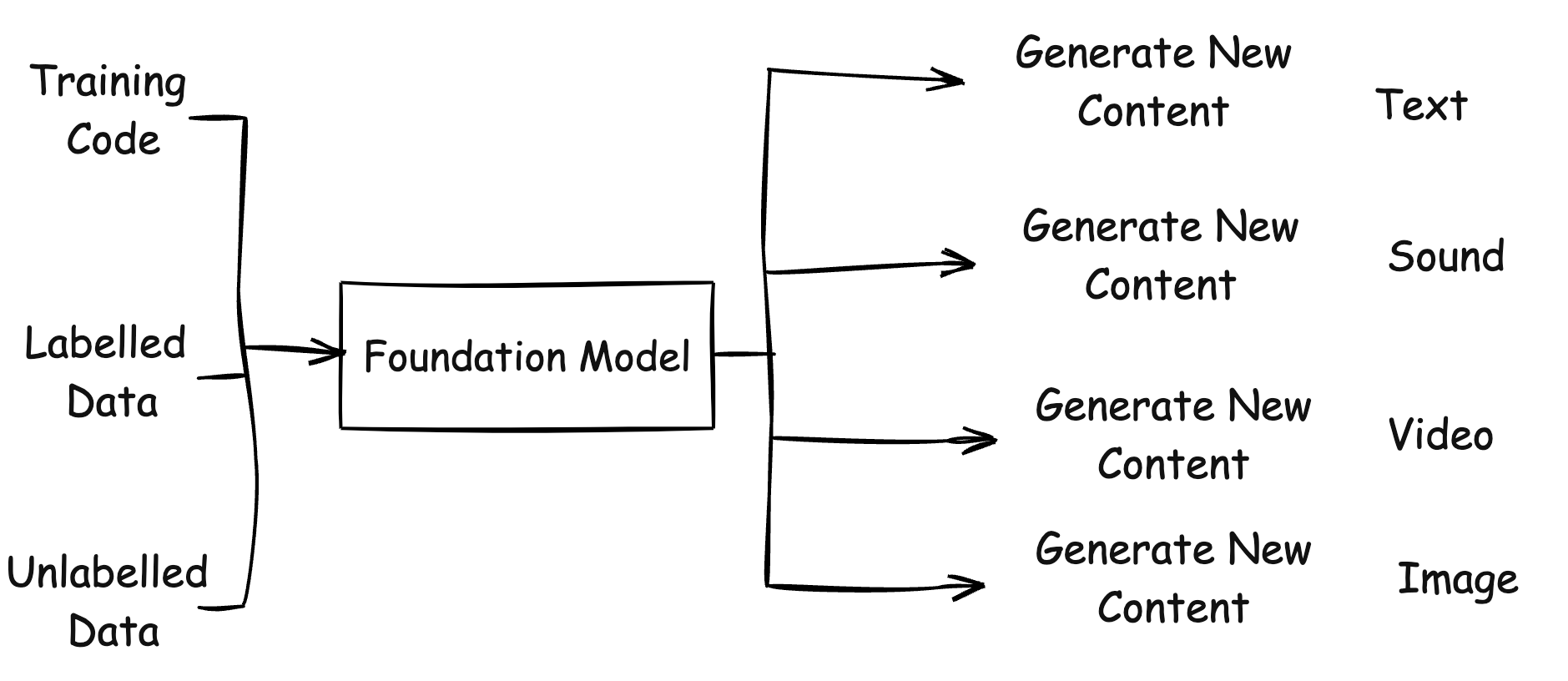
Generative AI is a subset of Deep Learning. That means it uses artificial neural networks and uses supervised, unsupervised and semi-supervised methods to process both labelled and unlabelled data.
Generative AI models are typically trained on vast amounts of data. This data could be text, images, or other forms of media. As the model learns from this data, it develops an understanding of patterns, structures, and relationships.
Once trained, the model can be prompted to generate new content. For example, you could ask a generative AI model to write a poem, create an image of a cat, or compose a piece of music.
Examples of generative AI applications:
- Text generation: Creating articles, stories, scripts, or code.
- Image generation: Creating realistic or stylized images.
- Audio generation: Creating music, sound effects, or speech.
- Video generation: Creating short videos or animations.
- Drug discovery: Generating new drug candidates.
- Art and design: Creating unique pieces of art or design.
Large Language Model (LLM)
Large Language Models (LLMs) are a type of artificial intelligence that are trained on massive amounts of text data. These models are capable of understanding, generating, and translating human language with a high degree of accuracy. They are also a subset of deep learning.
Key characteristics of LLMs:
- Massive datasets: LLMs are trained on billions or even trillions of words, allowing them to learn complex patterns and relationships in language.
- Deep neural networks: These models are built on deep neural networks, which are a type of machine learning algorithm that can learn from large amounts of data.
- Contextual understanding: LLMs can understand the context of a conversation or piece of text, allowing them to generate more relevant and coherent responses.
- Versatility: LLMs can be used for a wide range of tasks, including translation, summarization, question answering, and creative writing.
Deep Learning Model Types
There are two models with Deep Learning.
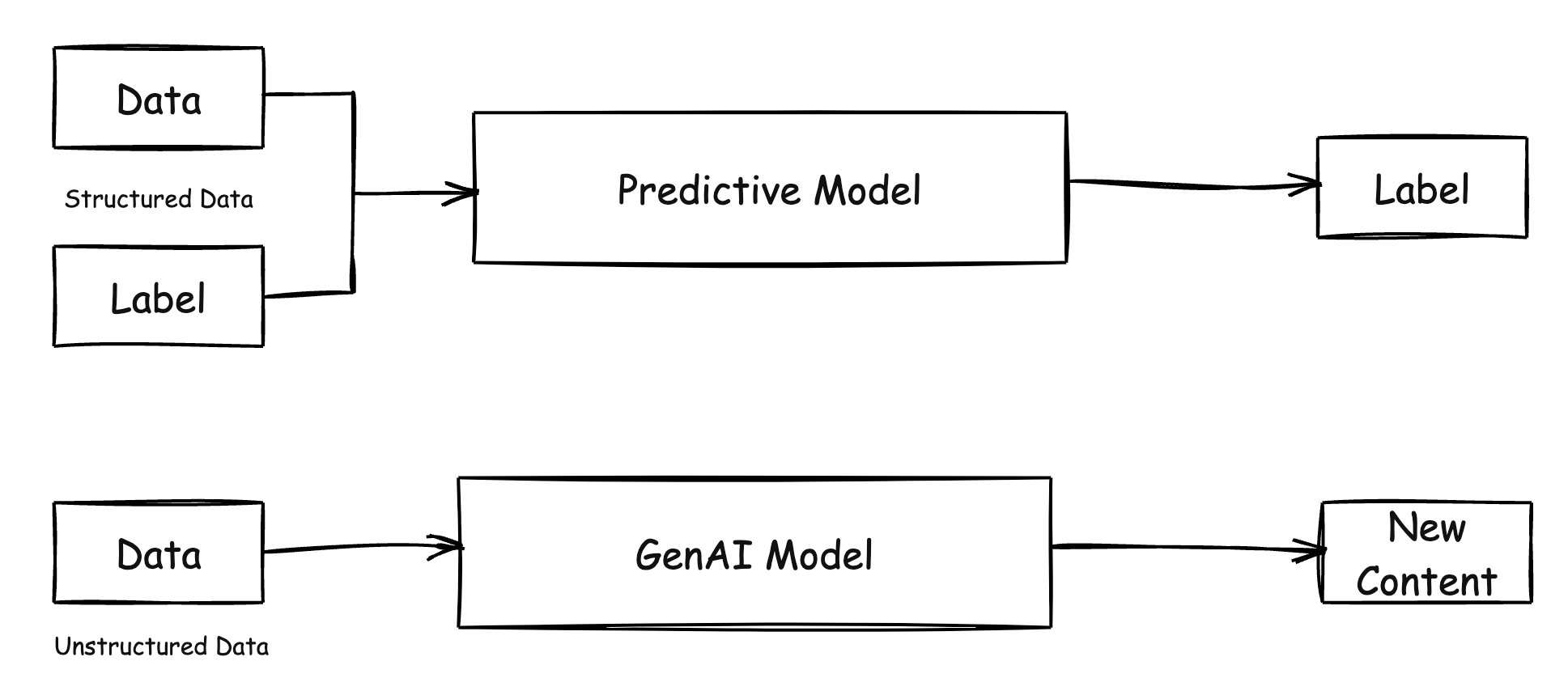
Predictive Model:
- Used ti classify or predict
- Typically trained on labelled dataset.
- Learns the relationship between the features of the data points and the labels.
Generative Model:
- Generates new data that is similar to the data it was originally trained.
- Understands distribution of data and how likely a given example is going to occur/happen.
- Predicts a new word in a sequence.
How To Differentiate Between GenAI Model & Predictive Model
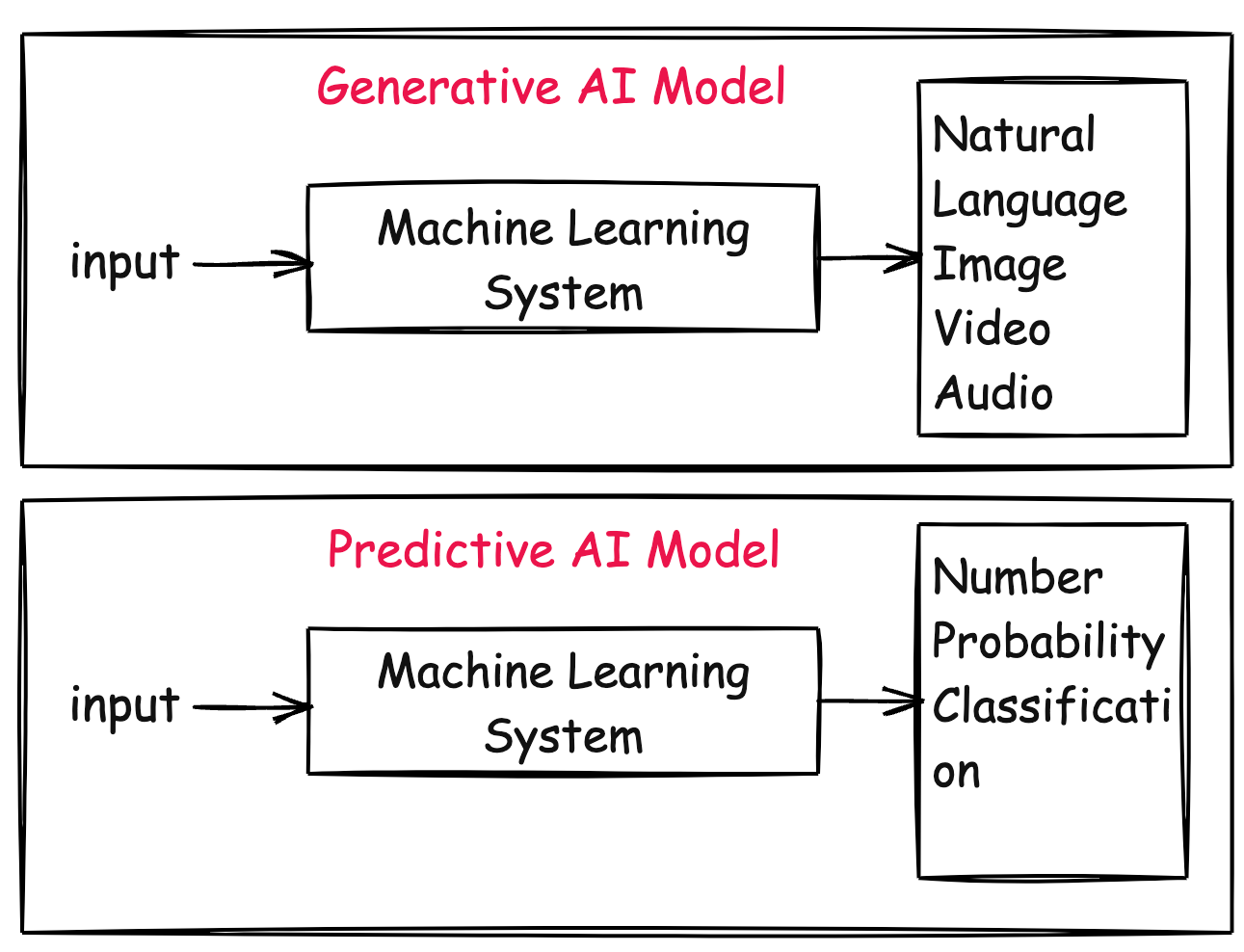
The easiest way to differentiate between Generative AI Model and Predictive Model is to find out the output. As you can see in the below picture, if the output from the model is natural language, Image, Video, Audio etc, then it's a Generative AI Model, whereas if the output is Number, Probability, Classification etc., then it's a Predictive AI Model.
Predictive Supervised & Unsupervised Learning
Generative AI Supervised, Semi-Supervised & Unsupervised Learning
How Does Generative AI Work?
- It is a type of Artificial Intelligence that creates new content based on what it has learned from existing content.
- The process of learning from an existing content is called Training and result in creation of a statistical model.
- When given a prompt, Generative AI uses this statistical model to predict what an expected response might be and that generates new content.
What Is Hallucinations?
Hallucinations are words or phrases that are generated by the model that are often nonsensical or grammatically incorrect. There are couple of reasons for Hallucinations. They are -
- Model is not trained on enough data.
- Model is trained on noisy or dirty data.
- Model is not given enough context.
- Model is not given enough constraints.
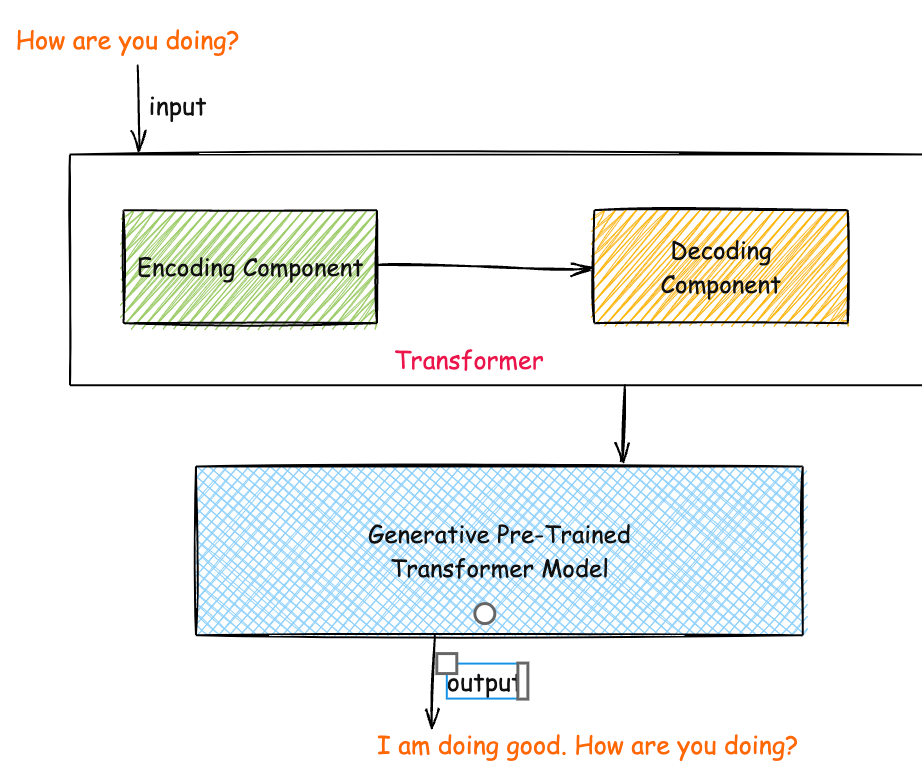
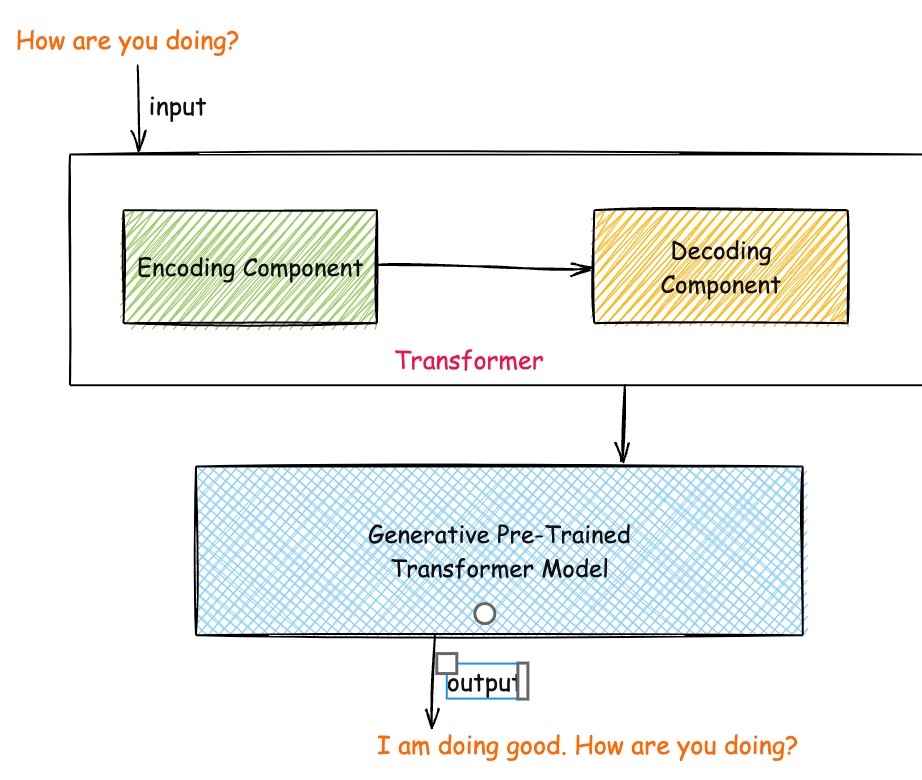
Hallucination can be a big problem for the transformer because it can make the output text difficult to understand. It can also make model to generate incorrect or misleading output.
Prompt Design
A Prompt is a short piece of text that is given to the Large Language Model as input and it can be used to control the output of the model in a variety of ways.
Prompt Designing is the process of creating the prompt that will generate the desired output from a large language model.
Final Thoughts
I hope this blog post and youtube video will provide you the introduction about Generative Artificial Intelligence (AI). I will be publishing more contents about this topic soon. Till then thank you and stay safe.
Disclaimer
This article is not endorsed by Salesforce, Google, or any other company in any way. I shared my knowledge on this topic in this blog post. Please always refer to Official Documentation for the latest information.




0 Comments